The 8-Hour Clock: Tracing Every Drop of CBD From Your Tongue to Bedtime
Most CBD labels tell you how much to take. Almost none tell you when the effects will arrive, when they'll peak, or when they'll fade. Yet timing is arguably the most important variable in a CBD routine, especially if you're trying to align a dose with falling asleep, winding down after a workout, or staying level through a long workday.
Here's a realistic timeline of what happens during the eight hours after a typical evening dose, along with how four common formats diverge along the way.
Hour 0: The Moment of Ingestion
The clock starts the instant CBD enters your body, but the route matters enormously.
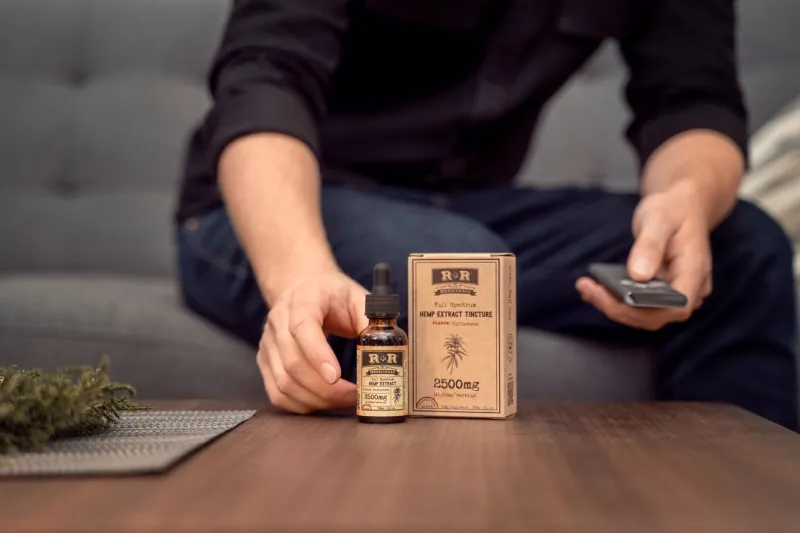
- Tincture (sublingual): Held under the tongue for 30–60 seconds, CBD absorbs through the mucous membranes directly into the bloodstream, bypassing the digestive tract entirely.
- Gummies and capsules: Swallowed products must travel through the stomach, into the small intestine, and through the liver before circulating. This detour, called first-pass metabolism, both delays onset and reduces the percentage of CBD that ultimately reaches your blood.
- Vape or inhalation: Absorbed through the lungs into the bloodstream within minutes, the fastest route available.
At minute zero, your body hasn't registered much yet. But the delivery method has already set the schedule for the next several hours.
Hours 0–1: Absorption Begins
A sublingual tincture typically begins entering circulation within 15–30 minutes. Many users describe the onset as subtle, a gradual softening rather than a dramatic shift, since CBD is non-intoxicating and works largely by supporting the endocannabinoid system's regulation of mood, inflammation, and sleep signals.
Inhaled CBD, by contrast, is already at work in this window. A 2018 review published in Frontiers in Pharmacology noted inhaled onset times of under 10 minutes, which is why some consumers reserve vaping for moments when they need immediate support, though the effects also fade faster.
Swallowed products? They're still in transit. Nothing noticeable yet.
Hours 1–2: Peak Territory for Fast Formats
Tincture users generally reach peak blood concentration somewhere between one and two hours after dosing. This is the window most relevant for intentional use: if you took a dropper to ease evening tension or settle in before bed, this is when the support is most active.
Vape users, meanwhile, are already on the downslope. Peak may have passed within the first half hour, and effects often taper noticeably by the two-hour mark.
Hours 2–3: The Delayed Arrivals Check In
Here's where gummies and capsules finally make their entrance. Because of digestion and first-pass metabolism, oral products commonly take 45 minutes to 2 hours just to begin working, with peak concentrations arriving between two and three hours after ingestion.
This delay is the single biggest reason people misjudge CBD. Someone takes a gummy, feels nothing after 30 minutes, takes a second one, and then gets hit by both doses simultaneously at hour two. Patience at this stage prevents doubling up.
Hours 3–5: The Sustained Middle
Once peak concentration passes, CBD levels decline gradually, and the slope depends on format. Edibles and capsules, thanks to slow digestion, tend to produce the longest plateau of support, which is why many sleep-focused consumers prefer them: the effect stretches comfortably across the night rather than spiking and vanishing.
Tinctures occupy a middle ground, with meaningful activity commonly lasting four to six hours. Studies on orally administered CBD suggest detectable levels can persist for six hours or more, tapering steadily.
Hours 6–8: Wind-Down and Metabolism
By hour six, most formats have faded into the background. What remains is metabolism: your liver's enzymes, primarily the CYP450 family, break CBD down into metabolites that are eventually excreted.
This matters for a practical reason covered in our earlier pharmacist-focused guide: CBD inhibits some of those same enzymes, which is how it can interact with medications like blood thinners. Even after subjective effects fade, residual CBD can still influence drug metabolism, one more reason to consult a healthcare provider if you take prescriptions.
Your Visual Timeline
| Time | Tincture | Gummies/Capsules | Vape |
|---|---|---|---|
| 0–15 min | Absorbing | In digestion | Onset |
| 30–60 min | Onset | Nothing yet | Peak passing |
| 1–2 hrs | Peak | Digesting | Fading |
| 2–3 hrs | Declining | Peak | Mostly gone |
| 3–6 hrs | Sustained taper | Sustained taper | Done |
| 6–8 hrs | Metabolizing | Still tapering | Metabolized |
Timing Your Dose Around Your Day
Use the clock backwards. Want support at a 10 p.m. bedtime with a capsule? Take it around 8 p.m. Prefer a tincture before your evening wind-down? Dose 60–90 minutes ahead. Need something for the final stretch of a workday? A tincture at 4 p.m. covers the 5–7 p.m. window; a gummy at 4 p.m. won't register until you're already home.
One final note: individual metabolism, body weight, and whether you've eaten all shift these timelines. The schedule above is a map, not a guarantee, but it's a far better map than the blank space on the back of most labels.