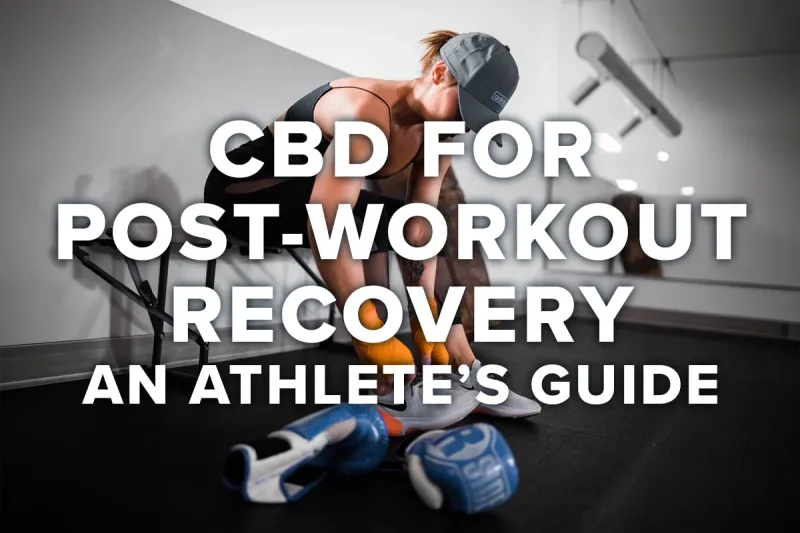
Beyond the Finish Line: What Competitive Athletes Need to Know About CBD, Performance, and the Rules of Their Sport

Photo by Photo by Andrey Khoviakov on Unsplash on Unsplash
For decades, competitive athletes have chased every legal edge available — refined nutrition protocols, altitude training, compression recovery gear, and meticulously timed supplementation windows. In recent years, cannabidiol (CBD) has entered that conversation with considerable momentum. Endorsements from professional athletes, a growing body of preliminary research, and the World Anti-Doping Agency's 2018 decision to remove CBD from its prohibited substances list have collectively pushed the compound into serious athletic discourse.
But enthusiasm and evidence are not the same thing. For athletes who compete under formal rules and submit to drug testing, understanding precisely what CBD can and cannot do — and what their specific governing body actually permits — is not a matter of preference. It is a professional obligation.
What CBD Is Actually Doing in the Body
CBD is a non-intoxicating phytocannabinoid derived from the cannabis plant. Unlike THC, it does not produce psychoactive effects, and its interaction with the endocannabinoid system (ECS) is indirect and multifaceted. The ECS plays a regulatory role across a wide range of physiological functions, including pain perception, immune response, sleep architecture, and mood stabilization — all of which are directly relevant to athletic performance.
When physical stress is applied to the body during high-intensity training, several cascading processes occur: muscle fiber microtrauma triggers an inflammatory response, cortisol levels rise, oxidative stress accumulates, and the central nervous system experiences fatigue. CBD appears to interact with several pathways involved in modulating these responses, though the degree and consistency of that modulation varies considerably across individuals and study conditions.
Critically, most existing CBD research has been conducted on animal models or in vitro cell environments. Human clinical trials — particularly those involving healthy, trained athletes — remain sparse. This is not a reason to dismiss the compound, but it is a reason to calibrate expectations carefully.
Inflammation, Recovery, and the Training Window
One of the most frequently cited potential benefits of CBD for athletes is its proposed anti-inflammatory action. Chronic, low-grade inflammation is a genuine impediment to athletic development; when recovery is incomplete between training sessions, performance adaptation slows and injury risk increases.
Preclinical studies suggest CBD may inhibit certain pro-inflammatory cytokines and interact with transient receptor potential (TRP) channels involved in pain signaling. For athletes, this raises an interesting possibility: could CBD support faster return-to-training windows by moderating the inflammatory response without fully suppressing it?
This distinction matters. Acute inflammation is not the enemy — it is a necessary component of the adaptation process. Completely blunting inflammation, as some NSAIDs are believed to do when used excessively, may actually interfere with long-term gains. CBD's proposed mechanism suggests a more modulatory role, which theoretically positions it as a more nuanced recovery tool. However, this hypothesis has not been rigorously tested in controlled human athletic trials.
What does exist is a growing body of athlete self-report data and smaller observational studies suggesting reduced perceived soreness and improved subjective recovery quality among users. These findings are meaningful but should be interpreted with appropriate caution.
Focus, Anxiety, and Competition Preparation
Beyond physical recovery, some athletes are exploring CBD for its potential role in pre-competition psychological preparation. Performance anxiety — the kind that disrupts sleep the night before a major event, elevates resting heart rate, and narrows attentional focus — is a well-documented performance inhibitor across virtually every competitive discipline.
CBD has demonstrated anxiolytic properties in several human studies, most notably in research examining social anxiety disorder and public speaking performance. The compound appears to modulate activity in the amygdala, a brain region central to threat processing and anxiety responses. For athletes, a calmer pre-competition mental state could theoretically translate into more consistent execution of trained skills under pressure.
This is an area where anecdotal evidence from professional athletes is particularly compelling. Numerous NFL veterans, UFC fighters, and endurance athletes have publicly credited CBD with improving their ability to manage pre-event nerves without the cognitive dulling associated with pharmaceutical anxiolytics. Whether this effect is pharmacological, placebo-driven, or some combination of both remains an open research question.
The Regulatory Landscape: What Your Sport Actually Allows
This is where the conversation becomes critically important for competitive athletes, and where generalizations can cause real professional harm.
The World Anti-Doping Agency (WADA) removed CBD from its prohibited list in 2018. This decision applies to athletes competing under WADA jurisdiction, which includes Olympic sports and many international federations. However, WADA's position comes with a significant caveat: all other cannabinoids, including THC, remain prohibited both in and out of competition. CBD products that contain trace amounts of THC — which includes virtually all full-spectrum hemp-derived products — carry a genuine contamination risk.
Major US sports leagues operate under their own independent frameworks:
- The NFL significantly relaxed its cannabis policy in its 2020 collective bargaining agreement, raising the THC threshold and eliminating suspensions for positive tests during the regular season. CBD itself is not explicitly addressed, but the reduced enforcement posture has made many players more willing to experiment.
- The NBA suspended cannabis testing for players during the COVID-19 pandemic and has not fully reinstated aggressive enforcement, though THC remains technically prohibited in its anti-drug program.
- MLB removed cannabis from its banned substances list in 2019 for players on the active roster, treating it similarly to alcohol. CBD use carries minimal regulatory risk in this context.
- The UFC follows USADA protocols, which align with WADA standards. CBD is permissible; THC remains subject to testing and thresholds.
- NCAA athletes face some of the strictest policies in American sports. Cannabis, including THC, remains on the NCAA's banned substance list, and athletes in tested sports face real consequences. CBD use from products with any THC content represents a meaningful risk.
For any athlete subject to drug testing, the practical recommendation is unambiguous: if you choose to use CBD, select a broad-spectrum or isolate product from a brand that provides third-party certificates of analysis confirming non-detectable THC levels, and look specifically for products that carry NSF Certified for Sport or Informed Sport certification — both of which involve independent batch testing for prohibited substances.
The Product Purity Problem
The US CBD market, despite growing regulatory attention from the FDA, remains inconsistently regulated. A landmark 2017 study published in JAMA found that nearly 70% of CBD products sold online were mislabeled — some containing significantly more THC than indicated, others containing far less CBD than claimed.
For recreational consumers, this is an inconvenience. For competitive athletes subject to drug testing, it is a potential career-altering liability. The burden of proof in most anti-doping frameworks falls on the athlete; a contaminated supplement is rarely accepted as an adequate defense.
This is not an argument against CBD use for athletes. It is an argument for rigorous product selection, documentation of purchase and batch numbers, and consultation with a sports medicine professional or certified athletic trainer familiar with anti-doping compliance.
A Measured Assessment
CBD is not a performance-enhancing drug in the classical sense — it will not increase VO2 max, improve power output, or accelerate muscle hypertrophy. What the available evidence does suggest is that it may support the conditions that allow athletic performance to express itself more consistently: adequate sleep, managed inflammation, reduced anxiety, and more complete recovery between training sessions.
For competitive athletes, that is a meaningful but carefully bounded proposition. The science is promising and directionally consistent, even if it is not yet definitive. The regulatory environment is navigable but demands sport-specific due diligence. And the product quality landscape requires a level of scrutiny that goes well beyond reading a label.
Approach CBD as you would any other element of a serious performance protocol: with curiosity, rigor, and a clear-eyed understanding of what the current evidence can and cannot support.