When the Clock Works Against You: What CBD Can (and Can't) Do for Shift Workers and Sleepless Parents

Photo: Hud Wahab, CC BY 4.0, via Wikimedia Commons
Somewhere around 3 a.m. in a hospital break room in Cleveland, a nurse is googling sleep remedies on her phone. In a suburban nursery outside Phoenix, a new mother is doing the same math: four hours until the baby wakes, maybe two hours of actual rest available. Neither fits the classic profile of the wellness consumer, yet both represent a growing share of Americans experimenting with CBD for sleep.
The question is not whether the demand exists. It is whether the product can deliver — and for whom.
Why Conventional Sleep Advice Fails a Third of the Workforce
Standard sleep hygiene guidance — consistent bedtimes, dark rooms, no screens — assumes a schedule that shift workers, emergency responders, and parents of infants simply do not have. An estimated 15 to 20 million Americans work overnight or rotating shifts, according to Bureau of Labor Statistics data, and their circadian rhythms pay for it. Add the roughly one in three adults who report short sleep duration, and you have an enormous population searching for help that a chamomile tea ritual can't provide.
Into that gap has stepped CBD, often wrapped in promises the evidence can't fully support.
What the Research Actually Shows
Here is the honest picture. CBD's relationship with sleep is dose-dependent and, frankly, counterintuitive. Lower doses in some studies have been associated with alertness, while higher doses — often in the range of 160 mg or more in early clinical research — have shown sedative-like effects. A 2019 observational study published in The Permanente Journal found that among patients reporting anxiety and poor sleep, sleep scores improved in a majority within the first month, though the study lacked a placebo control.
More rigorous randomized trials, including work on cannabis-derived products for insomnia, have produced mixed results. Some show modest improvements in time to fall asleep; others show no significant difference from placebo. Researchers also note that CBD's calming effect on anxiety may be doing indirect work — better sleep as a byproduct of a quieter nervous system rather than a direct hypnotic action.
The takeaway for consumers: CBD is not Ambien. Anyone expecting it to function like a prescription sleeping pill will likely be disappointed. Those using it to take the edge off nighttime anxiety or ease the transition toward rest report more consistent satisfaction.
Format and Timing: A Practical Comparison
For sleep purposes, delivery method matters as much as dose.
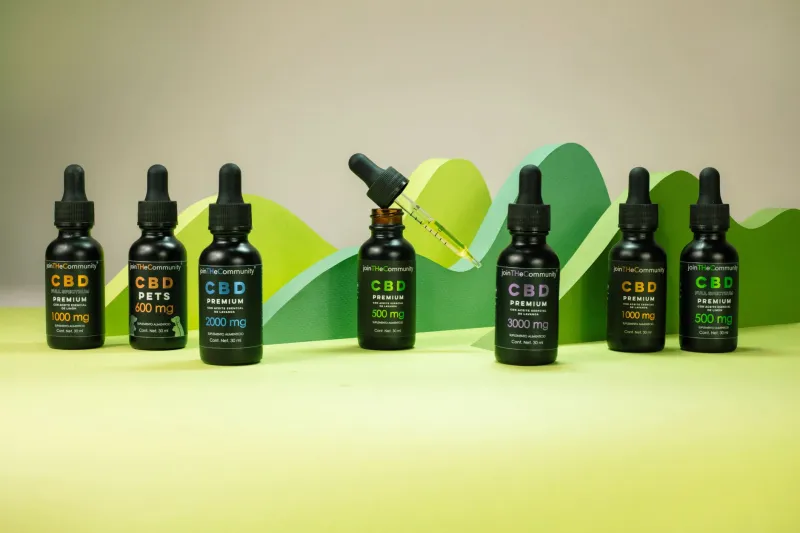
Oils and tinctures held under the tongue typically begin working within 30 to 60 minutes, making them suitable for taking an hour before your intended wind-down. This is the most flexible format for dose adjustment.
Capsules and gummies pass through digestion, delaying onset to 60 to 90 minutes but extending duration — useful for people whose challenge is staying asleep rather than falling asleep. A capsule taken 90 minutes before a daytime sleep after a night shift can cover a longer stretch of rest.
Vapes act within minutes but carry respiratory concerns and fall outside our general recommendation for nightly use.
Timing strategy deserves equal attention. Shift workers who sleep during daylight should anchor CBD to their sleep window, not the clock — 60 to 90 minutes before lying down, regardless of whether that's 8 a.m. or 8 p.m. Consistency across at least two weeks gives a fair trial; occasional use rarely reveals anything conclusive.
Start low — 10 to 25 mg — and increase gradually rather than chasing a large dose immediately. And check the certificate of analysis: sleep products are among the most likely categories to be mislabeled, with independent lab testing revealing everything from inflated CBD content to trace THC.
Red Flags: When It's Time for a Doctor, Not a Bottle
CBD is a reasonable experiment for situational sleeplessness — a rough stretch with a newborn, a stressful season, an occasional rough night. It is not a substitute for evaluation when certain patterns appear.
Loud snoring with gasping pauses suggests sleep apnea, which affects tens of millions of undiagnosed Americans and will not respond to any supplement. Chronic insomnia lasting more than three months warrants a conversation with a physician, particularly about cognitive behavioral therapy for insomnia (CBT-I), which clinical guidelines identify as the first-line treatment. Daytime fatigue severe enough to impair driving or job performance is a safety issue, not a wellness one.
CBD can also interact with medications — including blood thinners and certain anticonvulsants — so anyone on a prescription regimen should loop in a pharmacist or doctor before starting.
The Bottom Line
For the night-shift nurse and the exhausted parent, CBD sits in a defensible middle ground: not a cure, not a placebo, but a potentially useful tool for softening the anxiety and restlessness that sabotage rest. Approach it with realistic expectations, verified products, and a trial period measured in weeks — and keep a physician in the loop when sleeplessness stops being an inconvenience and becomes a health concern.
Sleep-deprived America deserves honesty from the wellness industry. The compound deserves a fair reading of the evidence. Both are possible at once.