Enforcement by Press Release: Why the FDA's Whiffs Became the CBD Shopper's Best Teacher
In the years since the 2018 Farm Bill legalized hemp, the FDA has issued hundreds of warning letters to CBD companies — for unsubstantiated health claims, for products containing drastically less (or more) CBD than labeled, for safety concerns the labels never mentioned. Enforcement has been selective, slow, and often invisible to the average shopper standing in a store aisle.
The result is a market that regulates itself the way a fishermen's wharf regulates itself: occasionally, publicly, and usually after someone has already been sold something they didn't bargain for.
The Recall Nobody Noticed
Consider the pattern that has repeated across the industry. Products testing at zero CBD while labeled as 500mg tinctures. Gummies containing synthetic cannabinoids that never appeared on any ingredient list. Beverage companies pulling CBD waters from shelves after state regulators — not the FDA — flagged mislabeling. These events generated brief trade-press coverage and virtually no consumer awareness.
The FDA's structural problem is well documented: with CBD approved as a pharmaceutical ingredient (Epidiolex), the agency maintains that it cannot simultaneously green-light the same compound as a dietary supplement without congressional action. That ambiguity has left a regulatory vacuum that brands fill at their own discretion.
Skepticism as a Feature, Not a Bug
Here's the contrarian take: this enforcement gap may have produced smarter consumers than robust regulation would have. In markets where the government certifies everything, shoppers stop asking questions. In the CBD market, asking questions is survival.
The veteran CBD shopper has developed instincts that most supplement categories never demanded: checking batch numbers against online lab results, distinguishing full-spectrum from isolate, recognizing the difference between hemp seed oil and CBD oil on an ingredient panel. That literacy is a genuine asset.
Your Personal Regulatory Framework
Until Congress resolves the FDA's impasse, you are your own enforcement agency. A workable framework:
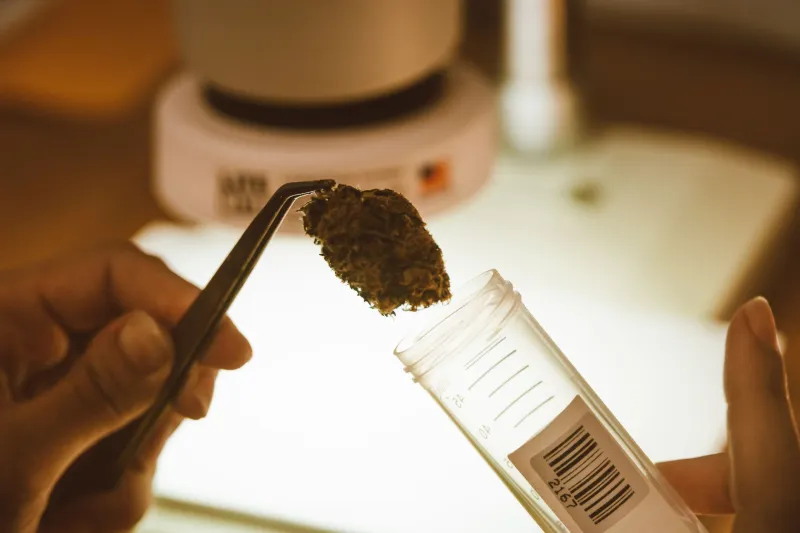
1. Demand the COA, every time. A certificate of analysis from an ISO-accredited third-party lab, current and matching the batch number on your bottle, is the minimum bar. No COA, no purchase.
2. Cross-check the claim against the math. If a 30ml bottle claims 5,000mg of CBD, the concentration should read about 166mg/ml on the lab report. Numbers that don't reconcile are a red flag.
3. Screen for contaminant panels. Full COAs include pesticides, heavy metals, and residual solvents — not just cannabinoid potency. Brands that publish only potency results are telling you half the story.
4. Watch the claims, not the packaging. Any product promising to cure, treat, or prevent a condition is echoing exactly the language that has landed hundreds of companies on FDA warning lists. Responsible brands speak in careful, hedged terms for a reason.
5. Track the company, not just the product. A history of warning letters, lawsuits, or quietly reformulated products is public information — and more predictive than any label.
The Market the FDA Built
There's an irony at the heart of the CBD economy: the agency's hesitation created the very conditions — chaos, skepticism, self-education — that made careful shoppers necessary. Regulation will eventually arrive in some form, and it will be a good day for the industry's honest operators. But the shoppers who learned to verify before they buy won't be giving up that habit. They shouldn't.