More Than Just CBD: Understanding the Entourage Effect and How to Choose Between Full-Spectrum, Broad-Spectrum, and Isolate Products
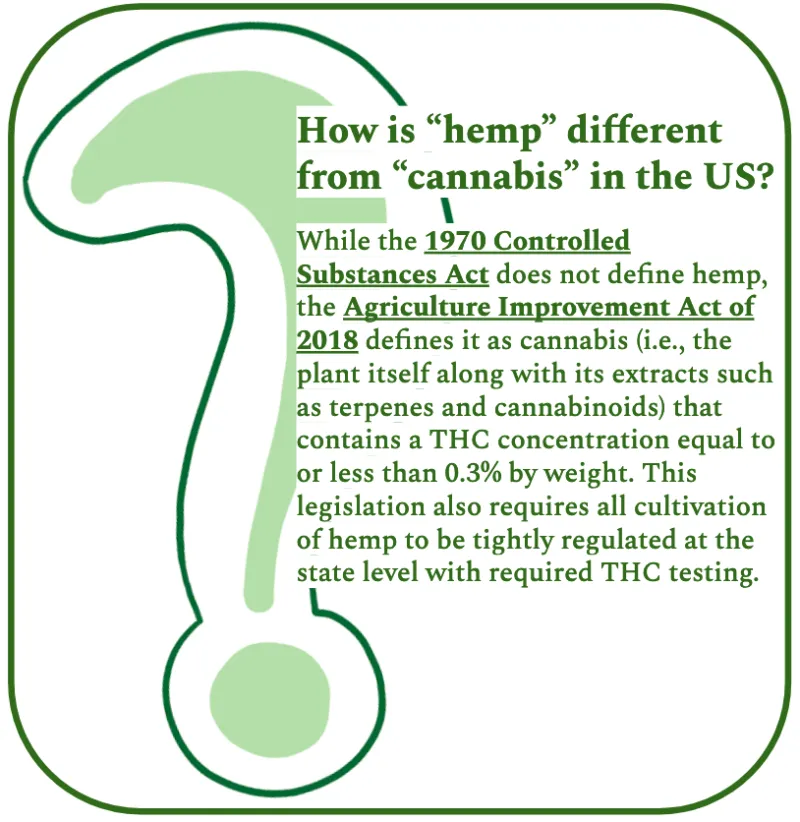
Photo: Mkf pm801, CC BY-SA 4.0, via Wikimedia Commons
For much of CBD's early commercial history, the marketing narrative was straightforward: isolate the compound, purify it, and deliver the highest possible concentration of cannabidiol. More CBD, the logic went, meant more benefit. It was a clean, intuitive story — and, as the science has since revealed, a somewhat incomplete one.
The concept of the entourage effect challenges this single-compound thinking in compelling ways. Rather than viewing CBD as a lone active ingredient, the entourage effect proposes that the full chemical complexity of the cannabis plant — its constellation of cannabinoids, terpenes, flavonoids, and fatty acids — works in coordinated, synergistic fashion to produce therapeutic outcomes that no single isolated compound could replicate alone.
Understanding this principle is not merely an academic exercise. It has direct, practical implications for which product you select from a crowded marketplace, and whether that product is likely to deliver the results you are seeking.
The Science Behind the Synergy
The term "entourage effect" was first introduced in 1998 by Israeli researchers Shimon Ben-Shabat and Raphael Mechoulam — the same scientist credited with identifying THC and mapping the endocannabinoid system. In their original paper, they observed that endogenous cannabinoid activity was enhanced by the presence of related lipid molecules, suggesting that the body's own cannabinoid system functioned through a kind of molecular teamwork.
This concept was later extended to phytocannabinoids — the compounds found in the cannabis plant — by neurologist and researcher Ethan Russo in a widely cited 2011 review published in the British Journal of Pharmacology. Russo's analysis proposed that cannabinoids and terpenes interact in ways that modulate each other's effects at receptor sites throughout the brain and body, potentially improving therapeutic efficacy while mitigating adverse effects.
Consider a few concrete examples of this synergy:
- CBD and THC: Research has demonstrated that CBD can attenuate some of the anxiety and psychoactivity associated with THC. In clinical settings, patients using whole-plant cannabis extracts have sometimes reported better tolerability than those using THC in isolation.
- Terpenes and cannabinoids: Myrcene, a terpene abundant in many cannabis cultivars, is thought to enhance the permeability of cell membranes, potentially increasing cannabinoid uptake. Linalool, also found in lavender, may contribute anxiolytic properties that complement CBD's own anxiety-reducing mechanisms. Beta-caryophyllene is notable for binding directly to CB2 receptors, making it the only terpene currently classified as a dietary cannabinoid.
- Flavonoids: Cannflavins, flavonoids unique to cannabis, have demonstrated anti-inflammatory activity in early research — adding another layer to the plant's therapeutic profile.
The cumulative picture is of a botanical system that has co-evolved with mammalian endocannabinoid receptors in ways that single-molecule pharmaceutical approaches have not yet been able to fully replicate.
Decoding the Labels: Full-Spectrum, Broad-Spectrum, and Isolate
With the entourage effect as context, the distinctions between product types become considerably more meaningful.
Full-Spectrum CBD
Full-spectrum products contain the complete range of compounds extracted from the hemp plant — including CBD, minor cannabinoids such as CBG, CBN, and CBC, terpenes, flavonoids, and trace amounts of THC (federally legal hemp-derived products must contain no more than 0.3 percent THC by dry weight).
This product type is most aligned with the entourage effect hypothesis. Users seeking maximum therapeutic breadth — whether for chronic pain, anxiety, inflammation, or sleep — are most likely to encounter it here. The primary trade-off is that trace THC, while insufficient to produce intoxication, may appear on a drug test depending on dosage frequency and individual metabolism.
Broad-Spectrum CBD
Broad-spectrum products occupy the middle ground. They retain the terpenes and minor cannabinoids present in full-spectrum extracts but undergo additional processing to remove THC entirely. This makes them an appealing option for individuals who want to capture some degree of entourage benefit while avoiding any detectable THC — including those subject to workplace drug screening, athletes competing under anti-doping regulations, or consumers in states with stricter legal environments.
The caveat is that THC removal processes are imperfect, and some degree of the synergistic interaction between THC and other compounds is necessarily lost. Broad-spectrum products represent a pragmatic compromise rather than an ideal.
CBD Isolate
Isolate is exactly what the name implies: pure cannabidiol, typically in crystalline or powder form, with all other plant compounds removed. It is odorless, flavorless, and precisely doseable — qualities that make it attractive for formulation purposes and for consumers who are sensitive to other plant compounds or who require absolute certainty that no THC is present.
The argument for isolate is not merely one of convenience. Some research suggests that for very specific applications — certain seizure disorders, for instance, as evidenced by the FDA approval of Epidiolex — high-concentration, pure CBD may be clinically sufficient. Furthermore, a 2019 study from the Lautenberg Center for General Tumor Immunology in Jerusalem found that isolate exhibited a "bell-shaped dose response" (meaning efficacy peaked and then declined at higher doses), while full-spectrum extracts maintained a more consistent dose-response relationship — a finding with meaningful implications for practical use.
A Practical Decision Framework
Choosing between these product types does not require a biochemistry degree, but it does benefit from honest self-assessment. Consider the following questions:
1. What is your primary wellness goal? For general wellness, stress management, or sleep support, full-spectrum products offer the broadest therapeutic engagement with the endocannabinoid system. For targeted, high-dose CBD applications or severe sensitivity concerns, isolate may be more appropriate.
2. Are you subject to drug testing? If your employer or sport governing body tests for THC metabolites, broad-spectrum or isolate products are the prudent choice. Even trace-level THC in full-spectrum products can accumulate with regular use.
3. Do you have sensitivities to plant compounds? Some individuals experience reactions to specific terpenes or flavonoids. If you have known sensitivities or are introducing CBD cautiously due to health conditions, isolate provides the most controlled starting point.
4. Do you live in a state where low-THC hemp products are clearly legal? Federal law permits hemp-derived CBD with less than 0.3 percent THC, but state laws vary. Verify your local regulations before purchasing full-spectrum products.
5. What does the product's Certificate of Analysis confirm? Regardless of product type, always verify that the manufacturer provides third-party lab testing confirming cannabinoid content, terpene profile, and the absence of pesticides, heavy metals, and residual solvents. This is non-negotiable for safety.
Reading Between the Lines on Product Labels
Be aware that marketing terminology is not uniformly regulated. Some brands use "whole-plant extract" and "full-spectrum" interchangeably; others may label a product "broad-spectrum" without independent verification of THC removal. The COA is your most reliable source of truth — not the front label.
Look for a terpene profile on the COA if you are purchasing full-spectrum or broad-spectrum products. Its presence suggests a less aggressive extraction process that preserves more of the plant's natural chemical complexity.
The Bottom Line
The entourage effect represents one of the most intellectually compelling areas of cannabinoid science — and one of the most practically relevant for consumers navigating today's CBD marketplace. The choice between full-spectrum, broad-spectrum, and isolate is not about which product is objectively superior; it is about which product's profile best matches your individual health goals, lifestyle constraints, and risk tolerance.
Armed with this framework, the labels that once seemed like marketing noise begin to tell a genuinely useful story about what is inside the bottle — and what it may do for you.