Packing CBD for Your Next Trip? Read This Before You Leave Home
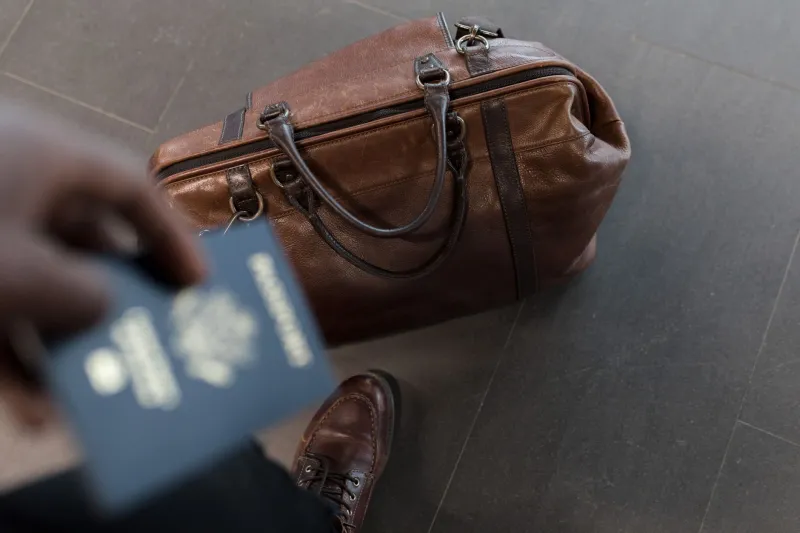
You did your research, found a quality product, and worked it into your daily wellness routine. Then vacation season arrives, and a new question emerges: can you bring it with you?
The answer is yes — usually. But traveling with CBD in 2025 requires more preparation than tossing a bottle into your carry-on. Here's what every traveler should know before heading to the airport or the highway.
The Federal Baseline: Why Hemp-Derived CBD Is Different
Everything starts with the 2018 Farm Bill, which removed hemp (cannabis with 0.3% delta-9 THC or less by dry weight) from the federal definition of marijuana. That single legal distinction is what makes CBD travel possible at all.
- Hemp-derived CBD is federally legal in all 50 states and permitted by TSA rules.
- Marijuana-derived CBD remains a Schedule I substance under federal law, regardless of what any state says.
This matters most when flying, because airports are federal jurisdiction. A product that's perfectly legal in California could create a serious problem at a federal checkpoint if it contains THC beyond trace amounts.
Flying with CBD: What TSA Actually Says
The TSA's official position permits FDA-approved products and hemp-derived CBD containing no more than 0.3% THC. In practice, agents are looking for security threats, not supplements — but that's not a guarantee.
Practical steps for air travel:
- Carry the certificate of analysis (COA). A QR code on the packaging isn't enough at a checkpoint. Save the lab report as a PDF on your phone, showing THC content below 0.3%.
- Keep products in original packaging. Unlabeled tinctures or gummies in a plastic bag invite questions you don't want to answer.
- Follow liquid rules. Oils and tinctures must comply with the 3.4-ounce carry-on limit unless checked.
- Leave anything questionable at home. Full-spectrum products with higher THC content, delta-8 items, or products from brands that don't publish lab results are not worth the risk.
Driving: Where State Law Takes Over
Road trips introduce a complication flying doesn't: state borders. While hemp-derived CBD is broadly legal, a handful of states maintain restrictions or require specific labeling, and enforcement can be inconsistent.
Before a multi-state drive, check the current CBD statutes for every state on your route — not just your destination. A few general principles:
- Keep products in sealed, labeled packaging in the trunk or a locked compartment where practical.
- Avoid transporting large quantities; personal-use amounts are far easier to explain.
- Remember that drug-impaired driving laws apply to THC, and some full-spectrum products contain enough to register on sensitive tests.
A Snapshot of State Approaches
States generally fall into three camps:
- Permissive: Most states, including Colorado, Oregon, Florida, and New York, align with federal hemp law and welcome CBD products.
- Restrictive with conditions: States like Idaho and Nebraska have historically required CBD to contain zero (not just trace) THC, or imposed specific labeling requirements. These are the states most likely to cause friction.
- Evolving: Several states revise hemp and cannabinoid rules annually, particularly around delta-8 and ingestible products, so last year's knowledge may be outdated.
The lesson: verify before you travel, and rely on current state resources rather than blog posts from a few years ago.
What If You're Questioned?
At an airport, stay calm and factual. If a TSA agent asks about a CBD product, explain that it's hemp-derived, point to the label and COA, and note that TSA policy permits such items. Agents may involve local law enforcement in rare cases — cooperation and documentation are your best defense.
At a state border checkpoint (most common in states like Texas or along the I-95 corridor), the same principles apply. Never consent to a search you're not legally required to allow, and never volunteer more information than asked.
International Travel: A Firm Word of Caution
This guide focuses on domestic travel for a reason. Many countries — including popular destinations in Asia, the Middle East, and parts of Europe — treat CBD as a controlled substance regardless of THC content. Travelers have faced detention and prosecution for carrying CBD into countries where it's prohibited. Unless you've verified the destination's current laws, leave CBD at home for international trips.
The Bottom Line
Traveling with CBD in 2025 is manageable with preparation: confirm your product is hemp-derived, carry documentation, keep packaging intact, and research every state on your itinerary. A few minutes of homework protects both your trip and your peace of mind — so you can focus on the vacation, not the checkpoint.