Three Lives, One Compound: Portraits of the Americans Who Use CBD and Rarely Talk About It
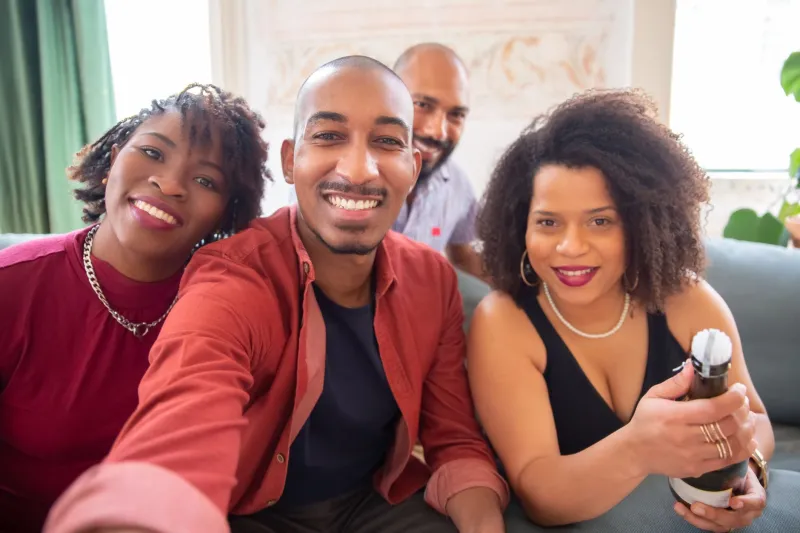
Walk down the wellness aisle of any pharmacy between Des Moines and Dallas and you'll find it: rows of tinctures, gummies, balms, and sparkling beverages all promising calm. What you won't find is the people buying them. CBD consumption in the United States has become remarkably widespread and remarkably quiet — an estimated one in five adults has tried it, yet most users mention it to neither their neighbors nor, in many cases, their physicians.
To understand this silent majority, CBDXpert spent time with three users whose lives could hardly be more different. Their stories don't settle the scientific debate around CBD, but they illuminate something just as important: how ordinary Americans actually decide to try it, what they hope for, and how they talk — or don't talk — about the choice.
The Ex-Athlete Who Read the Fine Print
Marcus Dean, 41, spent nine seasons as a collegiate and semi-professional soccer player in the Southeast before a knee injury ended his career. For years afterward, his routine was a familiar one for former athletes: ice, ibuprofen, and a stubborn refusal to slow down.
"I was taking NSAIDs like they were vitamins," he says. "My doctor told me my stomach lining was paying the price for my pride."
A former teammate mentioned CBD topicals, and Marcus's first reaction was suspicion — he'd spent his playing career under strict anti-doping rules, and the idea of anything cannabis-adjacent felt risky by reflex. What changed his mind was research, not advertising. Reading about the World Anti-Doping Agency's removal of CBD from its prohibited list in 2018 gave him a framework he trusted: rules, testing, and documentation.
Today, Marcus uses a broad-spectrum salve after long training sessions and keeps a certificate of analysis bookmarked on his phone. "I'm not going to tell you it's a miracle," he says. "I'll tell you my knees feel better after a match, and I can read the lab report on exactly what's in the jar. That's more than I can say for half the supplements I took in my twenties."
His lingering frustration is directed at his former leagues. "Retired guys like me get no guidance. Active players get education programs. The rest of us are left guessing in the supplement aisle."
The Night-Shift Nurse Who Keeps Two Routines
Renee Alvarez, 34, works twelve-hour overnight shifts at a hospital outside Phoenix. Her job is physically demanding and emotionally punishing in equal measure, and like many nurses, she is simultaneously a healthcare insider and a wellness skeptic.
"I've seen what's actually in the ER at 3 a.m.," she says. "I'm not impressed by marketing."
Renee tried a CBD gummy from a coworker's stash about two years ago, mostly out of curiosity, and noticed something subtle: falling asleep after a shift was marginally easier. What she did next is instructive. She didn't upend her routine or abandon her prescriptions. She added a low-dose gummy on nights she couldn't wind down, kept everything else constant, and tracked the results in a notes app for six weeks.
"Half the time I couldn't tell if it was the CBD or just finally having a night off," she admits. "But the trend was real enough for me."
What Renee won't do is recommend it to patients, and her reasoning is worth hearing. "People ask me about it at parties and I say the same thing: the products vary wildly, the evidence is mixed, and if you're on blood thinners or anything else, ask your actual provider first. I'm not anti-CBD. I'm anti-guessing."
Her two-routine approach — professional caution at work, personal experimentation at home — captures a tension many healthcare workers describe but rarely publish.
The Grandmother Who Told Her Book Club Before Her Doctor
Dorothy Whitfield, 68, lives in rural Ohio, where the nearest CBD retailer is a garden supply store that expanded its inventory three years ago. Her daughter sent her a bottle of full-spectrum oil for Christmas after reading about it online, and Dorothy's first instinct was generational: this was the kind of thing people hid.
"I grew up when marijuana was the devil's lettuce," she says flatly. "It took me a month to even open the bottle."
What Dorothy noticed was modest but meaningful — she described it as taking the edge off the stiffness that made her morning walks shorter each winter. But the more interesting development was social. She mentioned it at her book club, expecting raised eyebrows, and instead found two other members already using it. One bought gummies at a truck stop; Dorothy gently steered her toward products with third-party lab testing.
Her one regret is a familiar one in the research literature: she never told her physician. "I see him twice a year for fifteen minutes. It never came up, and I didn't push it." When CBDXpert asked what would have made that conversation easier, her answer was simple: "If I thought he wouldn't roll his eyes."
What Three Stories Say About a Nation
No three people can represent millions, but patterns emerge when their experiences are placed side by side. All three arrived at CBD through personal networks rather than advertising. All three did some form of informal research before committing. And none of the three reported dramatic transformations — instead, each described small, specific, measurable-in-their-own-lives improvements, paired with a clear-eyed acknowledgment of uncertainty.
The stigma gap is real but narrowing, and it runs along lines of generation and profession more than geography. Marcus, the youngest, discusses CBD openly. Renee separates her professional and personal selves. Dorothy, the oldest, was surprised to find her peers already converted.
For readers considering their own first bottle, these stories suggest a common starting sequence: define a specific goal, start low, choose products with verifiable lab results, give any trial several consistent weeks, and — the step all three of our subjects skipped or delayed — tell your doctor. The quiet majority got that way one unspoken decision at a time. It doesn't have to stay quiet.